ON THE GROUND
ON THIS PAGE: TRANSPORTATION | HOUSING | MONEY | COMMUNICATION | HEALTH AND SECURITY
Whether you are a seasoned explorer or Timor Leste will be your first international post, you’ll want to think ahead about arrival and settling in. Here’s some info that can help you plan for important aspects of life on this beautiful, up-and-coming island.
TRANSPORTATION
Transport is not terribly difficult in Timor Leste, and getting out and about in Dili (and beyond) is fun and fulfilling.
Timor’s relatively low level of development can bring some challenges, however, and road conditions vary widely. Many mountain communities are reachable only by dirt tracks that may become impassable in the rainy season. Even main roads out of Dili can make you drive through a stream, since no one has put a bridge in yet.
Because of road conditions and the appeal of cross-country adventures, long-term expats with the means to do so often buy a larger car/SUV/ute with some clearance, and possibly 4WD capability. This allows you to easily get out of Dili and into “the districts” on weekends and holidays, year-round. Others find a small car just to get around the city – or one of both. Try to buy a vehicle from an expat who is leaving, or ask around about reputable car sellers.
Many Timorese, and some expats also, navigate Dili on motorbikes. While running a motorbike exposes you to the elements, it also means you get through traffic faster. Speeds in Dili tend toward the low end and traffic culture is very communal, so driving a motorbike shouldn’t be a terrifying proposition. Accidents do happen; wear a helmet.
If you plan to drive a car or a motorbike for any length of time, get a Timor Leste drivers license. The DMV office is in Hera, over the steep Becora hill. Get advice and help from your organizational contacts, or hire a fixer.
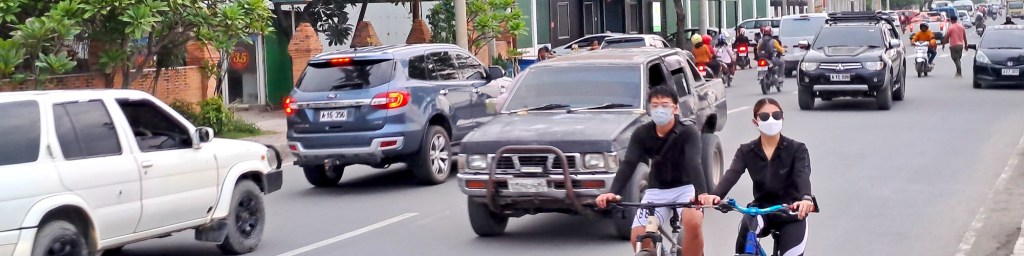
Biking is a viable option, as Dili city is quite flat. Bike lanes and trails do not exist, however, and heat is a factor. You will have to adapt to Dili’s communal road style, which can feel chaotic. But once you get used to it, you realize that Dili drivers are adept at avoiding all kinds of traffic going at all kinds of speeds, so your presence on a slowly-ridden bicycle is not the threat it might be in some Western contexts. And, since things tend to stay where you put them in Dili, a simple bike lock should be enough to keep your wheels secure anywhere you park it. For the adventurous, Dili’s hills offer rewarding mountain bike rides.
Timor Leste has a formalized but definitely non-ticketed public transportation system. In Dili, the microlet is the heartbeat of the city. Simply wait for one of these colorful, sometimes-rockin’ mini-buses to come along, then hop on; pay 25 centavos when you hop off. Check out this microlet route map (updated by a team of expats in 2023) for navigation particulars and riding tips. Microlets, open-bed pickups, and larger buses also service communities outside of Dili. Look for established edge-of-city bus stations, or ask locals for info when outside the capital.

Worse-for-wear yellow taxis also ply Dili streets – flag one down if you can. They do not have meters, so negotiate the price before you get in ($2-6 should get you just about anywhere in the city). There are usually some yellow taxis waiting at the airport for international flights (expect a minimum fare of $10). The ‘Blue Taxi’ company runs the only on-call metered cars in town; ask around for their phone number.
Note: Yellow taxis and microlets generally stop running after dark.
Renting a car, motorbike, or bicycle is possible. For cars, there are no international-style rental companies operating in Timor Leste, so you will need to book with a tour operator or other local option. Rented cars often come with a driver. Motorbikes are rented informally by a few known entities – ask around. For bicycles, casual users can try TIO Cycling+, serious riders can reach out to Comrider MTB Adventure.
Finally, a note on driving culture: for expats arriving from more Western contexts, Dili’s traffic norms can seem perplexing at best, frustrating at worst. Stop signs, for instance, do not exist; at intersections without traffic lights (which are most of them), drivers simply take turns. Lane markers are more of a suggestion than a rule. There sometimes seems to be no minimum, or maximum, acceptable speed. Vehicles often overtake each other in the oddest places.
Sometimes, a car or motorbike might turn or pull out in front of you with no warning. Such behavior can seem selfish – how dare you get in my way?!? But this is actually a reflection of the more communal culture that rules in Dili. Everyone simply fits in with the flow, and trusts others to adjust to their presence.
HOUSING
A variety of lodging is available for expats in Dili, from small rooms/apartments in a local family’s house to sprawling villas in ‘gated’ communities. Housing is usually furnished or semi-furnished, and can be expensive. Your house and grounds will likely be surrounded by a wall; this can seem unusual for some, but it’s pretty standard in developing countries.
Expats in Dili generally think about housing in two categories: compound, and stand-alone house.
Compound living means your house or apartment is inside a walled area that contains multiple houses or buildings. There is usually a gate with guards, a maintenance and cleaning crew, a manager who makes sure you have electricity and water, a generator for electricity outages, sometimes recreation facilities like a pool or gym. The downside of these perks is that you are living in a bit of a bubble, surrounded by other expats and somewhat isolated from the everyday life of Dili.
Living in a stand-alone house generally means that you will be living closer to Timorese neighbors and culture. But, you might have to take care of all the above services for yourself.
As a general rule, families with younger children tend to live in compounds, where kids can play together in protected space. Those who are more adventurous or want a more ‘authentic’ experience might choose a stand-alone house.
Another consideration: to live in town, or in Metiaut? The Metiaut suburb is on the eastern edge of the city, a 15-20 minute drive from the main parts of Dili. Living in the city generally means being closer to work and schools. Living in Metiaut means easier access to beach, hills, and accompanying recreation.
To find a place to live, it’s recommended to rely on your organizational or other trusted in-country contacts. There is not an established rental agent system, and following random housing leads can lead to dubious results. Consult with established compound managers to ask if they have openings, and chat up colleagues and other expats for recommendations. Landlords have varying reputations, so ask around to get the low-down before signing a lease.
MONEY
Traveler stereotypes often portray Southeast Asia as a cheap place to live and explore – this is not always true in Timor Leste. Maintaining an international-standard life in Dili can be expensive.
Timor Leste uses the US dollar as its main currency. Bills in $10 and $20 denominations are standard; $5s and $1s are rare. Change is given in local coins called centavos. Try to always carry a few coins for small purchases, like buying bananas on the street. It’s not unusual for a store or other establishment to have trouble making change for you. If you try to pay with a note that is very worn or old, it might be rejected.
Banking in Timor Leste can be challenging. Banks have just begun to offer online banking for some clients, and mobile money is in its infancy. Opening an account and transferring money will require time, patience, and the right documentation. Local help or guidance is highly recommended.
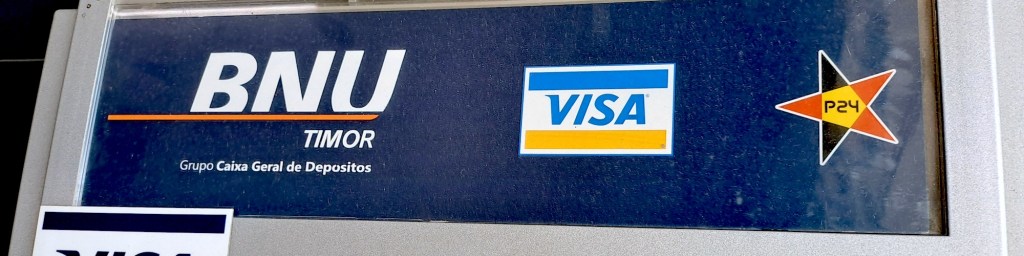
Getting cash from ATMs in Dili is generally easy. Note that, as of late 2023, all ATM (and credit card) networks in Timor Leste are VISA based – Mastercard will not work. Max withdrawals are usually $300, and you should be able to withdraw at least twice consecutively. ATMs can empty out in the runup to local and international holidays, and day-long, system-wide outages can occur – recommended to keep a backup stash. Carry cash with you when you travel in-country, as it is rare to see an ATM machine outside of Dili.
You can often pay with a Visa credit card at larger supermarkets and hotels in the capital. Your total is entered onto a portable credit card device, and you should get two receipts – one that prints from the cash till, and one that comes out of the credit card machine. Verify that the amounts match. Outside of Dili, you’ll need cash pretty much everywhere.
COMMUNICATION
Timor Leste has an international-standard mobile phone network, with at-least-minimal reception available in Dili and most places in the country. Go to one of the major telecom provider storefronts to buy a SIM card; be prepared to show a passport or copy. Pop the SIM in your phone, top up with a scratch card, and you should be in business.
Internet access is a little iffy-er. Though plans for multiple undersea cable connections are underway, as of late 2023 most internet comes into the country via satellite. This means speeds are slow from the get-go, and bandwidth is sometimes overwhelmed by users. Lack of quality internet is one of the more frequent expat complaints, so be prepared. Streaming services like Netflix and YouTube usually work, but buffering pauses aren’t unusual. Poor connections can inhibit remote work.
That said, internet is easily available through your SIM/phone from the major telecom providers – at 4G speeds, max. You can get ‘unlimited’ internet for $30 per month, maybe less. Some people say certain providers work better in certain areas, or swear by a certain internet plan, or stay up late to get remote work done – ask around and experiment.
You can have ‘wifi’ in your house by turning your phone into a hotspot, or by buying a SIM-based wifi device and keeping the plan topped up. It’s recommended to have multiple devices with multiple providers, so that if one cuts out, you can try the other. Specialized providers can offer bulk connections for offices or purportedly higher speeds for homes, but these services can be hundreds (or even thousands) of dollars a month.
Timorese get a lot of their news and online community through Facebook and WhatsApp. If you don’t already have accounts on these social media networks, you’ll want them.
Tetum-language radio has reach across the country. For TV, government station RTTL and private station GMN broadcast news and programs daily. Some cable TV is available, with international channels. Expats often pay for a VPN service so they can view streaming and TV offerings from their home countries, though low internet quality can impact access. Timorese newspapers do not generally play a big part in expat life, but Tatoli offers local news in English, and Portuguese news service LUSA maintains a Dili presence.

HEALTH AND SECURITY
The security situation in Timor Leste is generally good. After a flare-up of internal violence around 2006-07, the nation has remained peaceful, with stable political transitions. Theft and assault directed against “malae” (foreigners) is not a major concern. Many homes and compounds have guards or are connected to a local security service, though this could be seen more as a convenience than a necessity. Periodic instances of neighborhood rock-throwing, or reports of conflict between gang-like “martial arts groups,” is about as bad as it gets.
Domestically, violence against women in the home is high. Some expat women report harassment, nudity, or sexual innuendo from males in public, especially while exercising.
Climate change and lack of infrastructure can drive flood and other disasters that might affect large portions of Dili, including international housing areas. Earthquakes are common in the region. Tsunami risk is low, however, since Timor is surrounded by other islands that typically break up seismic-induced wave activity. A waterproof go bag and evacuation plans are recommended.
Police, fire, and ambulance services are available in Dili, though language can be a barrier. Expats tend to reach out to organizational, embassy, or community contacts when they need help. Again, make and communicate a personal/family emergency plan.
Air quality in Dili is usually decent, though dust from dirt roads and smoke from agricultural burning in the hills can be an issue, especially at the end of the dry season. Cooking fires also contribute, and acrid smoke from plastic being burned in neighborhood trash fires is unpleasant. Individuals with lung sensitivities can be affected.
The tropical sun is fierce: sunscreen and hats should be standard, especially for children. While tropical temperatures encourage short pants and sleeves, some don long-wear for sun protection. High temperatures and humidity can lead to dangerous infections even from slight wounds or aggravated insect bites – keep an eye on this, especially with kids.
Food-borne illnesses are a mild concern. Most expats avoid eating at street-side stalls. As in much of Southeast Asia, MSG is sometimes used in cooking – if you are allergic, be aware of possible headaches or other reactions.
Malaria is not a big thing in Dili. Periodic dengue outbreaks do occur, especially as the rainy season wears on and mosquitoes find constant puddles for breeding. Sensible anti-mosquito measures are recommended. March flies are sometimes a problem, especially on Atauro Island, since they have a painful bite that can cause swelling.
As for COVID, Timor Leste kept community transmission away for over a year by closing its borders and ramping up testing. When internal transmission finally came, a couple of shutdowns resulted and vaccines were brought in, until the nation figured out it wasn’t going to be a big deal here. At some point, the government realized dengue was causing more problems than COVID, so they phased out precautions.
Medical facilities in Timor Leste are not stellar. This is an important consideration for expats thinking of moving to Dili, especially families with young children, or those with chronic medical conditions. There is one hospital in Dili, HNGV – all emergencies go here. Service can be unpredictable. Friends or families of patients often have to scramble to get their loved ones needed supplies, medicines, and attention. There are occasional pleas for blood donors.
Stamford Clinic and Dili Medical Clinic employ international doctors, have some diagnostic equipment, and might have a specialist if you’re looking for one. A few embassies and medical NGOs bring in doctors that might be accessible in need. Most expats access dental care outside of the country, and expat women generally leave Timor to give birth.
Some kind of medical evacuation insurance or connection is highly recommended, as emergency medevacs can cost tens of thousands of dollars. Keep in mind that international medevacs take time to arrange, and are not possible at night from Dili. Even ‘routine’ injuries like a broken arm can lead to a medically necessary flight to Darwin or Bali or Singapore for international-standard care. Missionary Aviation Fellowship (MAF) can provide in-country medical flights from some district airstrips to Dili, in their small plane, if needed from outside of the capital.
 Dili Guide