
SIGHTS
ON THIS PAGE: DILI SIGHTSEEING | DAY TRIPS | OVERNIGHTS
Timor Leste’s best tourist asset is its relatively unspoiled ocean and mountains. But cultural, religious, and historical sites also exist in the capital and beyond. Read on to get an overview of what to see and what to do in and outside of Dili, then check out Travel Inspired’s video recommendations.
DILI SIGHTSEEING
Cristo Rei statue
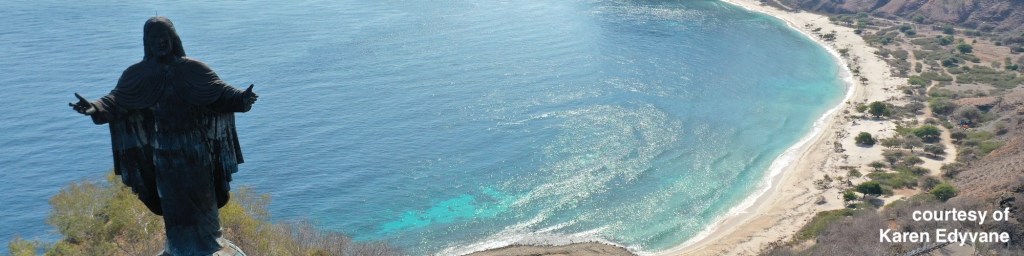
The large Christ the King statue, overlooking the sea at the top of a hill on the eastern side of Dili’s harbor, is Timor Leste’s talisman and most recognizable icon. Unveiled in 1996, it was a gift from Indonesia. Hundreds of steps lead from a car park to the top of the hill, where a colossal Jesus stands atop a very large globe. The stairs are lined with mini-chapels holding the stations of the cross – Catholicism is Timor Leste’s main religion – and there is a larger chapel at a flat, open area about two-thirds of the way up. While you’re here, make sure to take in Dili’s two finest beaches, on either side of the mountain spur on which the statue sits. Access to Dolok Oan, better known as Cristo Rei backside beach, is via the statue stairs. The Cristo Rei area can be crowded with Timorese families and youth groups on weekends.
John Paul II statue
This statue, on the western side of Dili’s harbor, is less imposing and more intimate. It was erected to commemorate the pope’s 1989 visit to Timor Leste. And yes, Jesus and John Paul are basically waving to each other across Dili bay. Accessed via stairs and a road at the western side of the Tasi Tolu area, a visit here can be peaceful – or an occasion to join others using the stairs for exercise.
Resistance Museum
Outside of visiting Cristo Rei for its combination of views, iconography, and beaches, a stop at the Resistance Museum is Dili Guide’s top recommendation for understanding Timor Leste. A small but well-presented exhibit guides visitors through Timorese history, with an emphasis on the events surrounding the end of Portugal’s hegemony, Indonesia’s subsequent takeover, and Timor’s long guerrilla campaign that culminated in independence. As with any site such as this, be ready for sobering reading, shocking video footage, and potentially triggering mementoes. Appropriate for kids of a reasonable age – be ready to give guidance.
Chega National Center
Chega! is the name of the very thick report produced by the Timor Leste truth and reconciliation commission, documenting human rights abuses during the Indonesian occupation. Housed in a Balide-neighborhood former prison used by Portuguese and Indonesian occupiers, the center aims to educate visitors about this period in Timor’s history – and point a way forward for Timorese youth. It has a reading library, and offers tours of former jail cells alongside informative exhibits.
Santa Cruz Cemetery
The scene of an infamous 1991 massacre by Indonesian forces, this is both a historical site and a communally significant burial ground. An Australian journalist captured footage of the 1991 killings and smuggled it out of the country, helping turn global opinion in favor of Timorese independence. The cemetery is more a place of local remembrance than a well-kept tourist spot. Go with a guide if you can, or visit after you’ve been to the Resistance Museum and know some of the history. Local organization JDN offers well-regarded tours that include the cemetery.
Dare Cafe and Museum
This cafe in the Dare area (pronounced “dar-ay”), 30 minutes up the hill from central Dili, has a great view, good coffee, and a variety of snacks – and also doubles as a museum commemorating the fight against World War II’s Japanese occupation.
Lighthouse
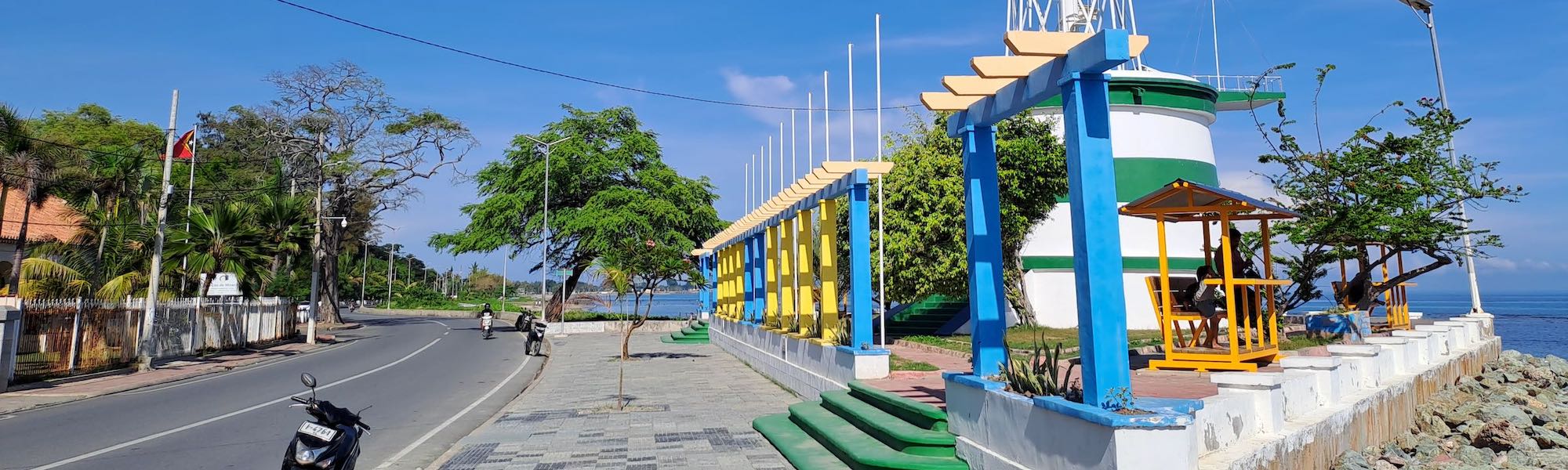
It’s not very impressive by way of a lighthouse and can feel neglected, but this site on the beach road in the middle of the harbor is a Dili icon. If the colonnade has been recently painted, it makes a lovely spot for photos and selfies.
Tais market
The tais market is a small collection of souvenir stalls down a side street near the Colmera business district intersection. Worth a visit for shopping. You may also be able to see some proprietors actively weaving tais, Timor’s culturally significant, handmade fabric.
Night market at Timor Plaza
On Saturday nights, the parking lot at Timor Plaza gets transformed into a night market. Though it’s mostly stalls selling food, there might be a bouncy castle for the kids or a stage with music. Worth a wander to try something new, meet up with friends, or let your preteens get cotton candy.
Hera mangrove boardwalk
Mangroves are amazing saltwater trees that form coastline ecosystems beneficial for human and animal life. A locally run study center on the outer edge of the Hera suburb maintains a boardwalk and trails for visitors to walk through this unique environment. Drive through Hera then look for the boardwalk on the left at a point where the road approaches the coast again. Monkeys often hang out around the boardwalk entrance – fun to watch, but can be creepy to walk through them.
Whale watching
Blue whales – and other whale species – make an annual migration through the Wetar Strait, right past Dili, every October and November (sometimes bleeding into September and December). Seeing these majestic creatures is an awe-inspiring experience. Some of Dili’s dive companies run whale watching boat tours during the migration season. A few operators will let you get in the water and swim with the whales. Whale tours can book full months in advance, so plan ahead. Be clear about your expectations and what is being offered before you book an experience; seeing a whale is never guaranteed. But if you do, it’s a lifetime memory! Whales can sometimes also be observed from shore, particularly along the stretch of coast just before Liquica town, where they come closer to shore. It’s rumored that some expats take high-powered binoculars to the hills above Cristo Rei and whale watch from there.
Sea turtle project at Kaitehu
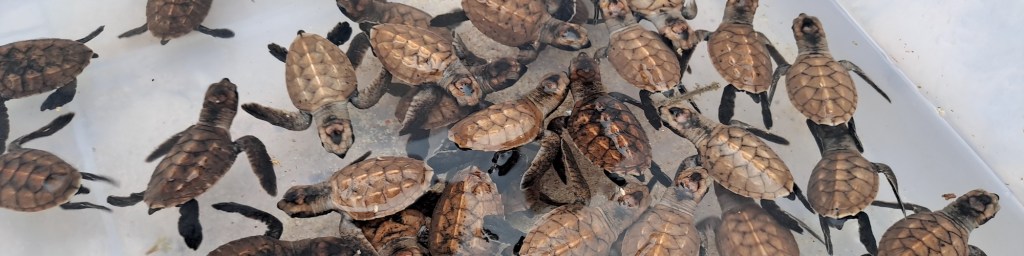
This coastal community to the west of Dili, between Tibar and Liquica, hosts a port-supported project to preserve sea turtle populations. A team protects and hatches sea turtle eggs, then releases the baby turtles. Periodic releases are community events – and super cute! The community has built bathrooms and keeps the area clean, making this lovely white sand bay a great spot for a beach outing, picnic, or camping night.
DAY TRIPS
Aileu
A trip to Aileu means greenery, mountain scenery, and cooler air. The town of Aileu is about an hour’s drive up from Dili on the fairly steep “waterfall road,” so called because you literally drive through a waterfall. Most of the road has been newly paved since 2023, but rough spots remain. You should be prepared to drive through a streambed as well, as you leave Dili along the Comoro River. For many expats, going to Aileu also means a stop for lunch at Projeto Montanha. This restaurant and art gallery/school in a small hill station compound has a Brazilian influence and trains local youth in art and culinary service. Call ahead to make sure they will be open; it’s recommended to order entrees before leaving Dili. Dili Vanilli, a vanilla and spice operator, runs a bed and breakfast called Posada Txiriboga Aileu. Stay overnight in a room or your tent, have a meal, access local trails, or take one of their farm tours. Also in Aileu: a coffee processing facility opened in September 2023 by Orijem Timor, and an agroforestry project called Quinta Portugal; if you can establish contact, a visit or tour might be possible. DG Tip: If artist Inu Bere is in residence at Projeto Montanha, ask him to show you around; also, try the lasagna.
Railaco and Gecko Cafe
Driving uphill from the Tibar roundabout, you’ll reach the town of Railaco. Expats on this road tend to stop before the town, however, at Gecko Cafe. Housed in the Timor Global coffee-company HQ, this small cafe happily serves you their best brew. It’s worth the trip! The road up from Tibar is paved and fairly easy to navigate. On your way to this coffee shop stop, pull over at the top of the hill to enjoy a lovely windy point with a scenic view, before starting the short descent into Railaco’s river valley. Extend your cafe visit with a jaunt around Railaco or a walk in the nearby hills.
Letefoho coffee growing region
The Letefoho/Ermera region is well known for coffee production. Various companies and cooperatives operate out of the area, making it attractive for visitors who want to explore a coffee plantation and learn more about the coffee-making process. Tours are very popular during coffee harvesting season. Pleasant walks are available from this ridge-line hamlet, including to the large Jesus statue on a hill above town. Driving to Letefoho takes about three hours on a road that is decent through Railaco and into Gleno, then bumpy and dusty afterward. The Cafe Brisa Serena organization operates in the area, gives tours, and supplies Letefoho Cafe in Dili. To make this trip an overnight, they have a small guest house in their Letefoho town logistics compound, with a few bunk bed rooms and shared bathroom. You can also ask around in Dili about other Letefoho/Ermera region coffee opportunities.
Alma do Mar and Lauhata in Liquica
The town of Liquica is about an hour west of Dili, along the coast. The draw for expats, however, are two beach places just before the town. Alma do Mar Resort and Lauhata Beach Escape both have beachfront restaurants good for breakfast, coffee/drinks, lunch, or dinner. Make this your day trip, or a drinks/meal stop while you’re on another adventure. Or, turn it into an overnight – Alma do Mar has villas, and Lauhata Beach Escape offers small rooms or camping. DG Tip: An Indian chef (great curry with roti for vegetarians) and shade on the beach edges Lauhata as a lunch pick, while nicely appointed villas make Alma do Mar attractive for an overnight.
Maubara Fort, Liquica church massacre site, and Ai Pelo prison
A journey west from Dili offers a circuit of coastal sites highlighting Timor Leste’s colonial history. First up, the Ai Pelo prison ruins rise just before the town of Liquica. This historical site was once a Portuguese jail, newly outfitted in 2023 with interpretive signs and a bathroom. You may have to ask around for someone to unlock the gate. In Liquica town, the main Catholic church was the site of a massacre by Indonesian forces in 1999. Further west, Maubara Fort was – in an odd twist of history – actually constructed by the Dutch. Old walls contain a shady courtyard with lovely tall trees, plus a restaurant and small souvenir shop. Outside the entrance, more local handicraft stalls await.
Beaches, snorkeling, diving
Of course, the most frequent day trips involve the ocean. Pick a beach, pack or order a meal, gather your sand stuff and snorkeling gear, and head out. If you scuba dive, days spent in the water are probably going to top your list of best days in Timor Leste.
Waterfalls and walking
The mountains outside Dili are rife with waterfalls, especially in the rainy season. Some are so accessible you drive through them on main roads. Others are so hidden you can bushwhack for hours and never get there. All are beautiful; some you can swim in, if you wish. Waterfalls make good destinations for walks. But, Timor being Timor, there’s no real catalog of such things. Seeking out waterfalls is best approached through the standard Dili adventure-plotting method: ask around, get a variety of info, try to collate it against anything online, use your common sense to sketch a plan, then go try it. Be prepared to follow narrow dirt roads and even narrower trails, perhaps ‘guided’ by local kids with whom you’ve negotiated a small fee, using your market Tetum.
OVERNIGHTS
Baucau
The hillside town of Baucau, Timor Leste’s ‘second city,’ makes an easy weekend overnight. The Pousada Baucau is the standard place to stay. A pink Portuguese structure sits flamboyantly in the heart of Baucau’s old town, with a restaurant, a flower-filled garden, and nice rooms in separate “new” and “old” wings. If you don’t want to eat at the pousada, try Amalia or Vitoria restaurants in the old town not far away. Be sure to swim in the nearby Baucau Pool. This concrete modernist relic sports a high dive and a slide. It’s filled with fresh water from the mountains, so expect it to be closed about every other day for cleaning.
A visit to Baucau should include a jaunt to Wataboo Beach, 20 minutes down the mountain on a side road. You can pick whatever section of beach you want along the largely unpopulated dirt-track coastline. Note that swimming is not recommended here, due to higher risk of crocodiles. Go far enough along the beach and you’ll find an Instagramable natural rock arch growing in a random field. The Portuguese-run Da Terra farm is on the hillside on the way to Wataboo Beach. They offer simple accommodation and delicious meals. Call ahead to order lunch or dinner, as they won’t cook if they don’t know you are coming. You’ll also need their directions to find the place.
The drive to and from Baucau is a sight in itself, with steep coastal sections offering amazing ocean vistas. The road is well paved, except for the final few kilometers down the hill into Baucau’s old town. Travelers with their own vehicle love to take a break at Kafe BouAli. This is a roadside pit stop with toilets, snacks, great coffee, and a river valley view. Find it at the tiny town of Laleia, between Manatuto and Bucoli. The Corner Store Network, not far past Hera, is another good stop.
Baguia
The impressive Baguia Fort and stunning Matebian-area hiking make Baguia well worth a trip. Local legend Mana Leo oversees a raft of community initiatives, including running the fort as a guest house. The fort has two dormitory style bunkbed rooms with shared bathroom in the main house, and two outbuildings with a private room/bathroom each. Meals are available; open porches make a pleasant setting for eating. Kids love exploring the grounds and turrets.
Appealing hiking is available on the Mt. Matebian complex overlooking Baguia’s fort and town. Walking up to the ridge takes about 2 hours on a sometimes steep, mostly well-established trail. Mana Leo can supply a guide. Longer adventures are available, including a rumored camping spot atop the ridge that can be a base for further hiking. It’s possible to do a day-long circuit by going back down the road a ways, up to Gulari school, then a spectacular scramble through a notch in the ridge between high meadows, and back down to Baguia – only for the hardy.
Travel notes: As of late 2023, a drive from the coast to Baguia takes about 2.5 hours. The route is actively under construction, with a good sealed road planned to open in 2024-25. Also as of late 2023 – do not use Google Maps to get to Baguia Fort. Google will send you up to Quelicai then on a nonexistent road over the Matebian ridge. The real turn to Baguia Fort is at the coast town of Laga (to make things harder, Laga appears to be mislabeled on Google Maps), just past the Dili 142 km marker. This actual road to Baguia appears to be missing from Google. As of late 2023, the turn, which is at the Sao Joao Bosco church, had a road sign pointing toward Baguia..
Liquica
As mentioned above under Day Trips, Alma do Mar and Lauhata Beach Escape have rooms for overnights on the beach near Liquica. Sometimes there’s dolphins to spot over breakfast. Or, during blue whale season, blue whales!
Balibo
Balibo is a two hour drive west along the coast, then half an hour up a bumpy road into the hills. Watch the movie Balibo to see this town’s tragic story, then visit the Flag House where it happened. Balibo Fort is one of the nicer accommodations in Timor Leste. The old walls have a proper colonial archway at the entrance, and a Portuguese-style house holds reception and a restaurant. The terrace and garden have beautiful views of mountainside down to the ocean, and a small infinity pool invites relaxing. Their caipiroska is one of the best cocktails in Timor Leste; a fire warms up mountain evenings, which can turn chilly. Comfortable rooms are in two modern structures along the driveway. The fort hosts the Balibo Veteran’s Museum, a great place to learn about Timorese history and colonial resistance. Balibo Trails takes visitors on long and short tours to a variety of caves, waterfalls, and other sites.
Maliana
An hour or two beyond Balibo is the town of Maliana. On a plateau among the hills, a walk through the town’s quiet rice fields is peaceful and educational. Stay at Uma Du’ut, which has a few lovely handmade wooden cottages next to the rice fields, and an inviting two-story restaurant overlooking the area’s grass-and-dirt runway, which sees more goats than airplanes.
Maubisse
The mountain town of Maubisse is about an hour beyond the day-trip destination of Aileu. There’s not a lot to do here other than enjoy the scenery and the mountain air and watch the clouds go by – though for some, that’s more than enough. Leublora Green Village (also called the Green School) has two hillside cabins with nice views, a restaurant building, and a fire pit; if you need lunch or dinner, order ahead. Rooms are sometimes available at the Maubisse Pousada. Expats often recommend Sara Guesthouse on a roundabout in town.
Mt. Ramelau
Maubisse or the dirt-road town of Hatobuilico can be a jumping-off point for climbing Timor Leste’s most famous and highest mountain. Be prepared for a long hike and lots of stairs, with a beautiful view at the top (if you’re not wreathed in cloud). Some adventurers start the hike waaaay before the crack of dawn, aiming to be communing with the summit’s statue of the Virgin Mary at sunrise. Dili Guide isn’t sure that’s necessary, but, you know, you do you. Ask around for lodging and guide recommendations.
Same
Like Maubisse, the main thing to do in Same (pronounced “sahm-ay”) is to enjoy the mountains and being out of Dili. It’s a good spot to stay the night before visiting the south coast and trying to catch a glimpse of the infamous saltwater crocodiles there. Hotel Umaliurai just south of Same town is Australia-connected and feels like a creaky wooden lodge in the Alps. It has a large human-made, faux-rock pool and a nice eating area. Driving to Same is just about worth it simply for the scenery from Maubisse to Same town. Beyond Maubisse, a mountaintop view demands you pull over and enjoy it. From there, the road gets steeeeep in sections as it winds down over wooded hillsides toward the southern sea.
Jaco Island
Jaco is an uninhabited island at the eastern tip of Timor Leste. The beauty of its white sand beach and tropical waters rival any seaside in Southeast Asia, and the snorkeling is excellent. It’s a 6-8 hour drive from Dili, typically via Baucau, Com, Fuiloro, and Tutuala. Some choose to break up the drive with a night in Baucau or Com; Kati Guest House is a popular place to stay in Com. You can also stay at the quiet, nun-run ADM Guest House in Lospalos town. Mainland Valu Beach is the launching point for the 5 minute boat ride to Jaco Island. There are no services of any kind on the island, so visitors must bring everything they need. Arrange with your boat driver how long you want to stay; there is generally no cell service on the island. Three hours is a good minimum to enjoy the place, and some groups stay all day.
Lodging can be found at Valu Beach via Lakumorre Guest House or the community-run Valu Sere. Both are quite basic, and might cost more than you expect. Food is available, though some expats prefer to self-cater with fresh fish and a barbecue set up by the guest house. You can also stay at the Tutuala Pousada, in Tutuala town a 15 minute drive up from Valu Beach. This colonial Portuguese structure features an uh-mazing view from the breezy porch, along with two large rooms in the main house and a few smaller rooms in an outbuilding. The view is worth a stop, even if you’re not staying there.
Two notes: 1.) A trip to Jaco requires a maximum of the adventurous flexibility that should come standard for those who want to get out and about in Timor. You’ll want to bring some of your own basics, like snacks/food, water, extra TP, flashlights and first aid kits, that kind of thing. 2.) A stop in Nino Konis Santana National Park on the way to or from Jaco is well worth it. Look for a dirt side road leading south near the town of Mehara, then follow it along a grassy plain until you get to a bamboo bridge. Once there, walk along the stream (don’t swim!) and swamp, being careful of / actively looking for crocodiles (that’s why you shouldn’t swim), depending on how you feel about such encounters.
Atauro Island
Atauro is a large-ish crag of land tantalizingly close to Dili – you can see it just across the Wetar Strait most days – but it takes some work to get there. Visitors are rewarded with a relaxed island life, coconuts and beaches, and some of the lushest coral reefs in the world. Just be aware: Atauro is a bare-bones place that saves its finest bounties for the open, flexible, less-demanding traveler.
Visits usually center around the main town of Beloi, which has a variety of places to stay.
- Atauro Dive Resort: A variety of huts set back from a rocky beach. Order meals in the restaurant pavilion.
- Barry’s Ecolodge: Eco-cabins made from local materials in a beautiful garden just off a gently sloping beach. Meals served in a communal eating pavilion.
- Beloi Beach Hotel: AC rooms, a pool, and a cocktail lounge/restaurant on the hill above Beloi town.
- Compass Dive: Tents with beds, and a few newer AC villas, at a coastal dive camp with its own ‘house reef.’ Meals served in a communal eating pavilion.
Other more local lodging and homestays also exist on Atauro – ask around. Mario’s Place offers simple accommodation at Adara, on the western side of the island. You’ll need to book a boat or take the long walk over from Beloi town.
Options for transport from Dili to Beloi include weekly ferries, a smaller “dragon fast ferry,” chartered speedboats, and a light plane ride with Missionary Aviation Fellowship. Ferries are inexpensive but sometimes inconvenient; speedboats and the light plane are expensive but sometimes more convenient. Barry from Barry’s Ecolodge keeps up a page with a pretty good description of Atauro transport options. Keep in mind: transport is always subject to weather and ocean conditions; boat crossings can be rough. Don’t plan your return to Dili for the same day as your international flight out – things happen.
And then, what is there to do on Atauro? Well, relish the feeling of being somewhat remote and disconnected. Admire sunrises and sunsets. Walk the beach or hike the hills. Read in your hammock. Search tide pools at low tide. Snorkel and scuba on reefs bursting with sea life. Chat up other visitors in the eating pavilion. Spend half a day at Akrema beach, north of Beloi. Well, you get the idea. It’s not a pampered paradise; it’s the low-key, no-fuss ‘good life’ – relax and enjoy it.
Where Is Dili?
Dili is a developing city with a surprise around every corner. See what you can find.
About Dili Guide
Dili Guide is a community resource for expats coming to or living in Dili.
Get In Touch
diliexpatguide@gmail.com
 Dili Guide